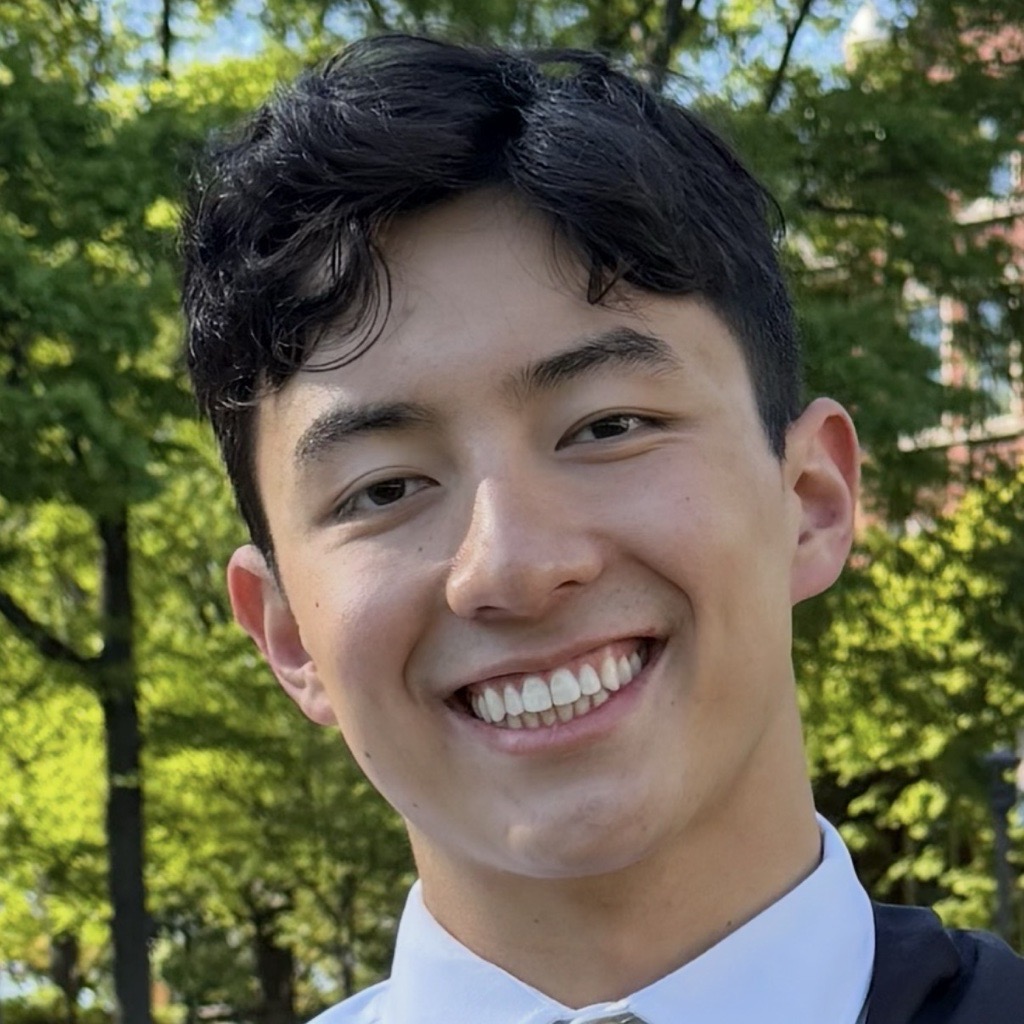
Stephen Jones headshot
Atlanta, GA • Open to Work
Georgia Tech BSME '26 OMSCS: Computational Perception & Robotics D1 Varsity Swim Captain

Stephen Jones

Georgia Tech BSME • Robotics Graduate Student

Recent Georgia Tech Mechanical Engineering graduate and MSCS student in Computational Perception & Robotics. I build and test functional hardware prototypes, combining mechanical design, rapid fabrication, embedded C++ firmware, and edge computer vision.

Former Division I Varsity Swim Team Captain at Georgia Tech. Four years of balancing 20+ hours of weekly athletic training with an engineering degree built a standard of high accountability, fast execution, and composure under pressure.

Highlights & Proof of Work

A direct look at my athletic leadership, technical competition honors, and life outside the shop.

ATHLETIC LEADERSHIP

D1 Varsity Swimmer & Team Captain

  • 4-year Division I student-athlete on Georgia Tech's Men's Varsity Swim Team.
  • Elected Team Captain for the 2024 to 2025 season.
  • Bridged communications across 60+ athletes, coaches, and staff while leading the men's recruiting process.
  • Sustained 20+ hours weekly of rigorous water workouts, weight training, and travel throughout full-time BSME coursework.
  • Specialized in butterfly sprint events.
AWARDS & RECOGNITION

Honors & Competition Wins

  • Recipient of the 2024 Brandon Adams Teammate Award, voted by team members and coaches for leadership and camaraderie.
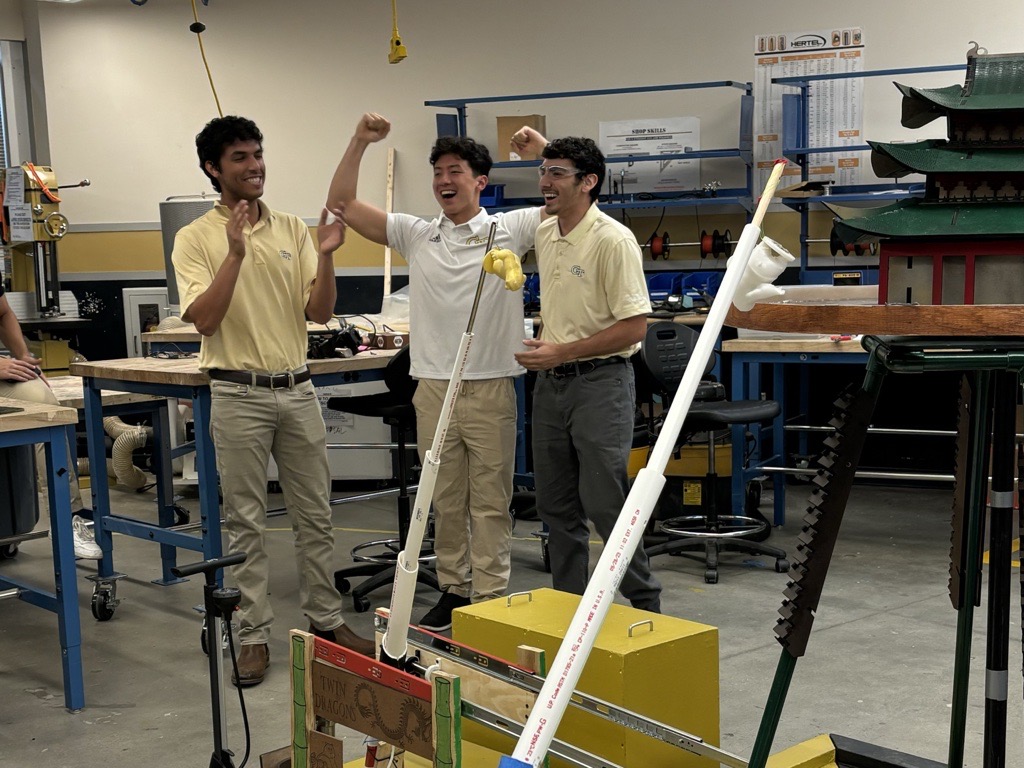
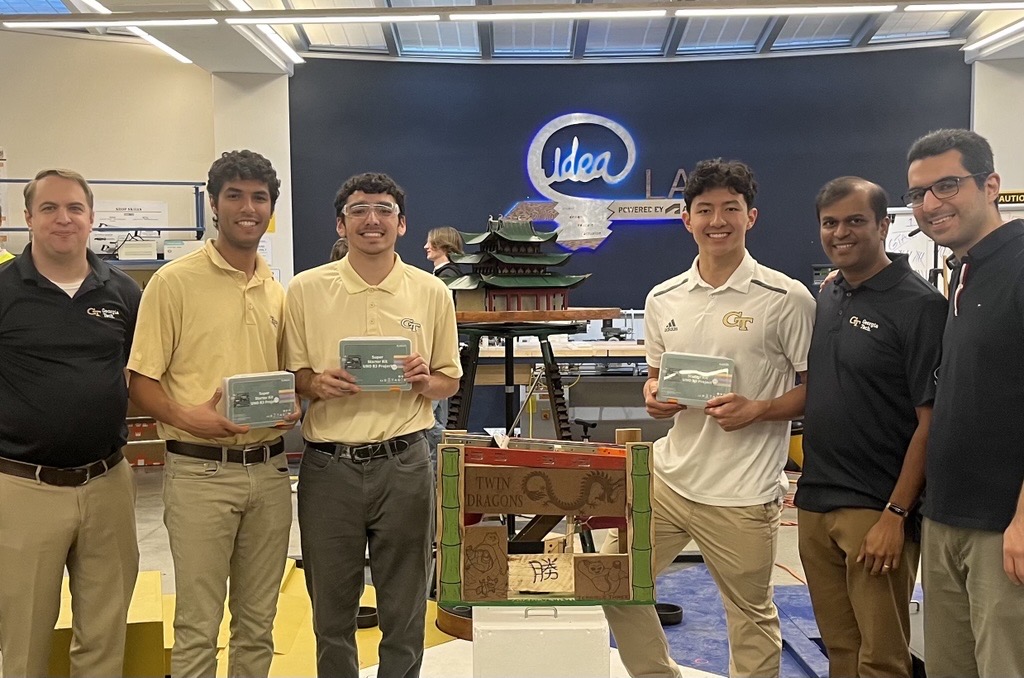
  • 1st Place Champion out of 5 teams in Georgia Tech's signature autonomous machine design contest (ME 2110).
  • Top 30 International Finalist out of 300 entries in the global XPRIZE Wildfire autonomous suppression challenge.
  • Graduated BS Mechanical Engineering from Georgia Tech with consistent focus on dynamics and mechatronics.
LIFE OUTSIDE WORK

Interests & Free Time

  • Baking homemade desserts from scratch, optimizing for maximum flavor.
  • Mountain hiking, exploring outdoor trails and National Parks.
  • Playing retro arcade games, pinball machines, and sharing this time with friends.
  • Anime and manga enjoyer: fully caught up on the One Piece anime (over 1,100 episodes of pure dedication).

Featured Hardware Systems

Detailed mechanical tradeoffs, code architectures, and high-resolution CAD & prototype media.

SENIOR CAPSTONE // KHANJUR R&D

Wireless Shape Memory Alloy (Nitinol) Robotic Claw

Lead Mechatronics Engineer • Jan 2026 to May 2026

ESP32 Firmware Embedded C++ Nitinol SMA MOSFET PWM SolidWorks
🔒

Confidentiality Notice: Certain proprietary CAD schematics, Nitinol geometries, alloy specifications, and imagery have been omitted or redacted in accordance with a Non-Disclosure Agreement (NDA).

Objective & Mechanical Tradeoffs

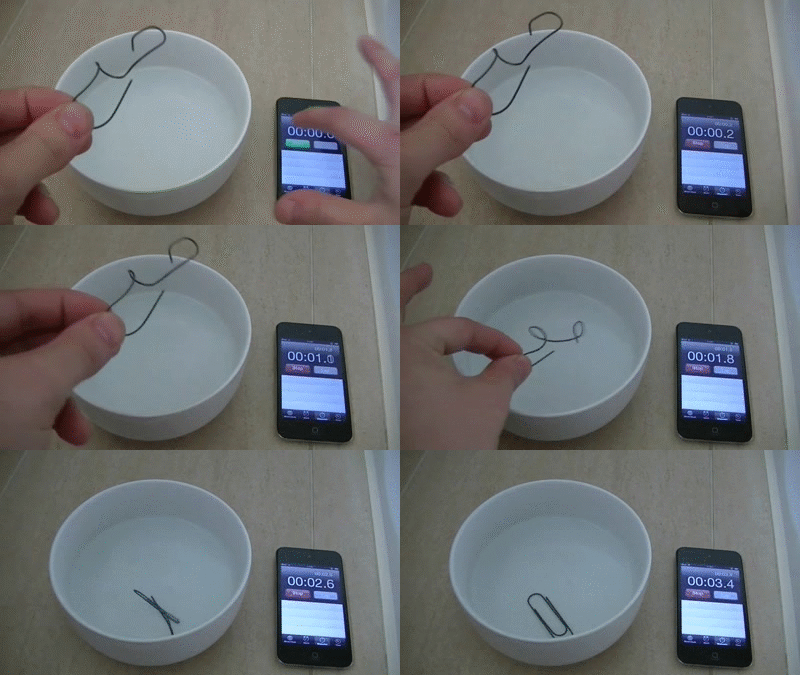
Robotic end-effectors traditionally depend on bulky electric servomotors and gearboxes that add inertial weight to distal joints and introduce mechanical backlash. Collaborating with Khanjur R&D, our objective was to replace electric motors with resistive Joule-heated Shape Memory Alloy (Nitinol) wire.

  • Thermal-Current Control: Engineered high-frequency PWM switching across logic-level N-channel MOSFETs to meter heating current accurately, preventing wire anneal damage while ensuring repeatable closure force.
  • Embedded Wireless Server: Programmed custom C++ firmware on an ESP32 microcontroller hosting an asynchronous local Wi-Fi web server, achieving smartphone teleoperation with sub-50ms latency without relying on external networks.
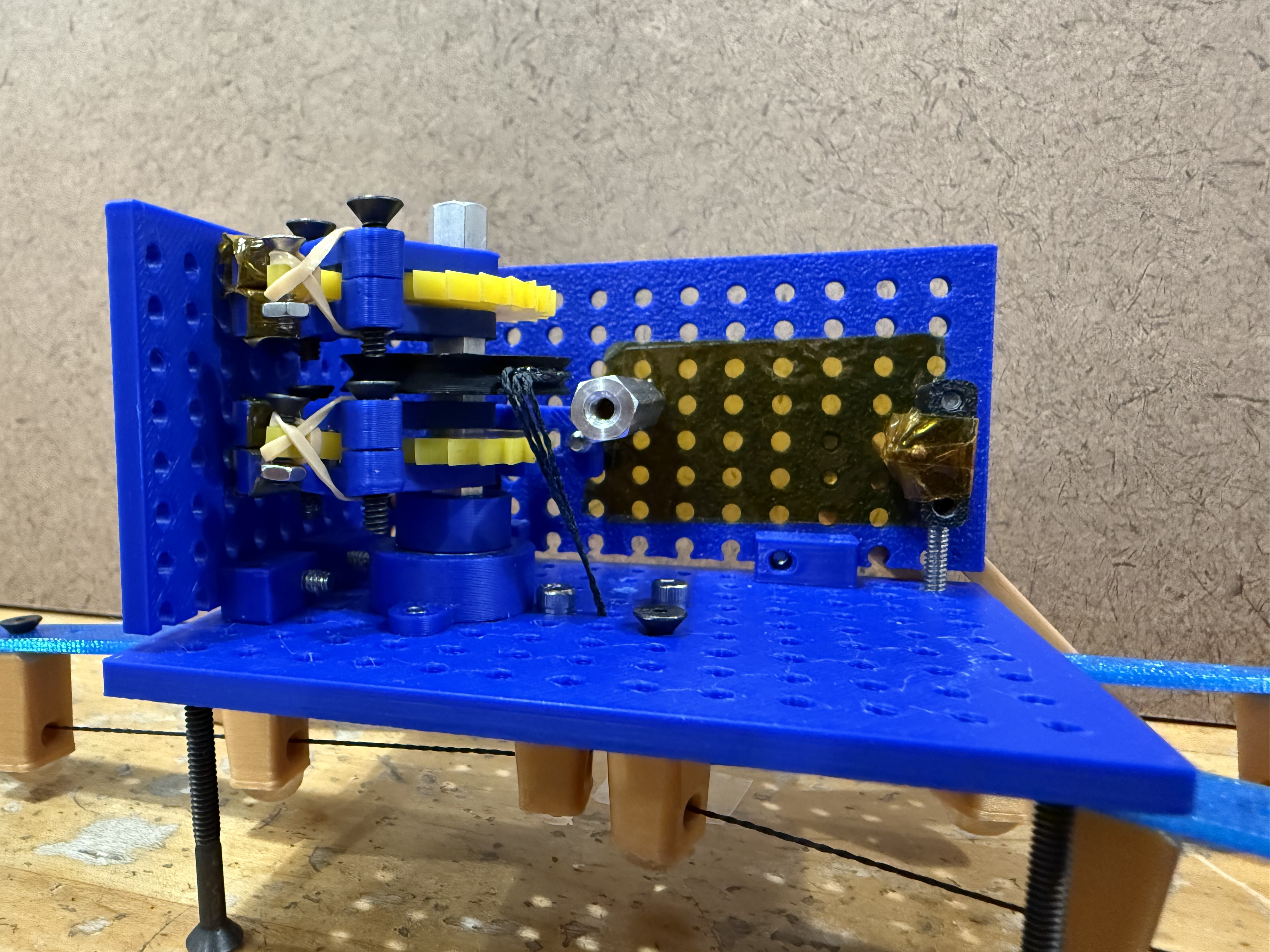
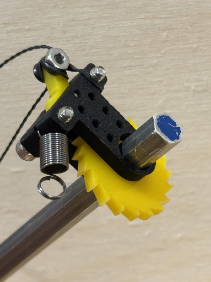
  • Hardware Evolution: Iterated through PVC bench rigs, internal ratchet mechanisms, and 3D printed mechanical levers to amplify stroke displacement from subtle alloy contraction.
Result: Delivered a silent, backlash-free end-effector that dropped actuator mass significantly compared to traditional DC gearmotors.

Actuator Architecture

Actuator: Resistive Nitinol SMA Wire
Controller: ESP32 (Dual-Core 240MHz)
Switching: Logic-Level N-MOSFET (PWM)
Control UI: Local Wi-Fi Web Server
Mechanical CAD: SolidWorks 2026

Prototype Showcase & Actuation Video

Click the large preview to open fullscreen high-resolution inspection.
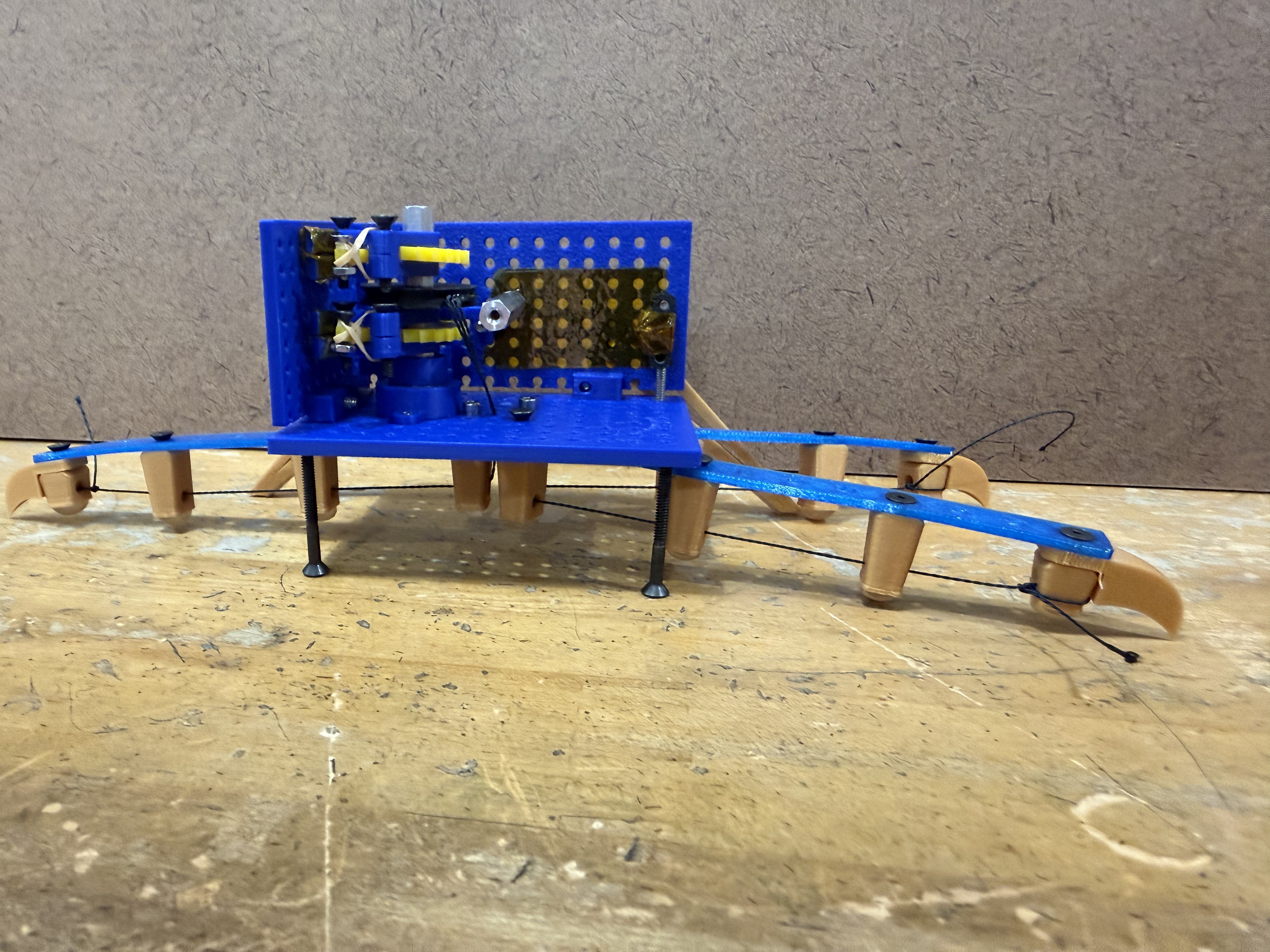
Final Prototype Open Side View
Final Prototype: Open Side View (Assembled)
Final prototype open view Final Assembly
Final prototype interior Interior View
Video thumbnail Actuation Video
Nitinol thermal demo Nitinol Thermal Demo
Ratchet mechanism Ratchet Latch
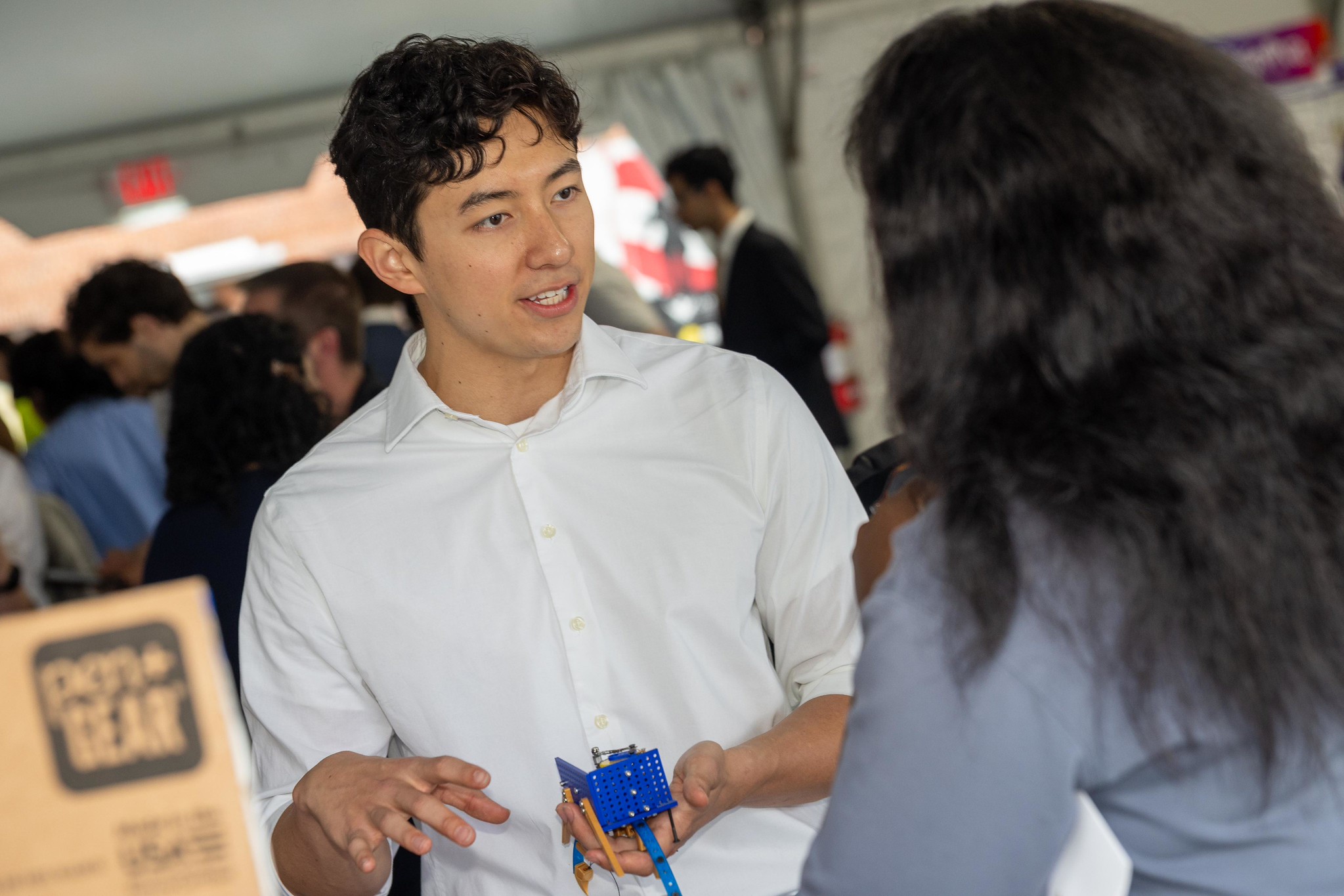
Capstone Expo presentation Expo Presentation
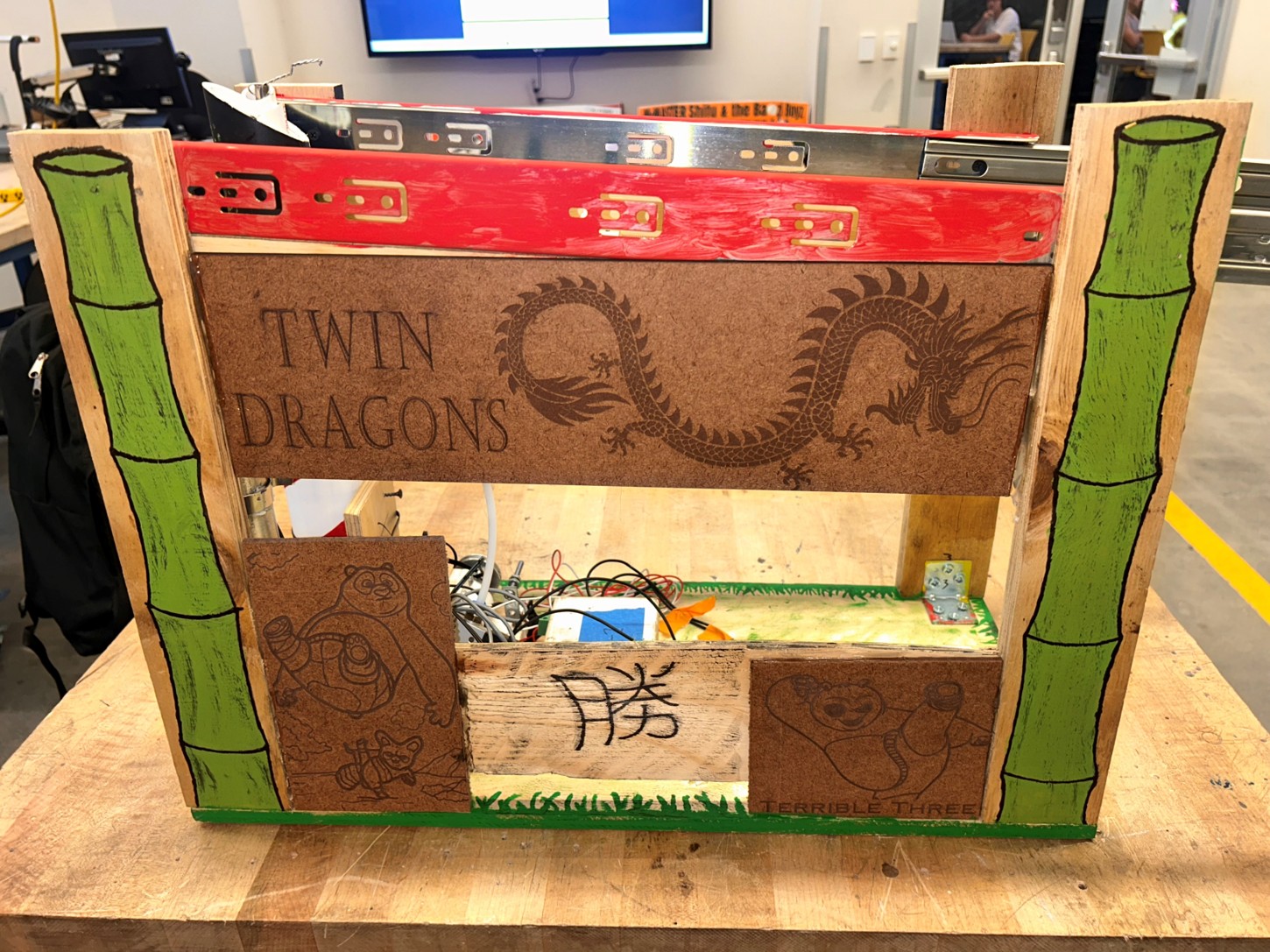
GEORGIA TECH // ME 2110

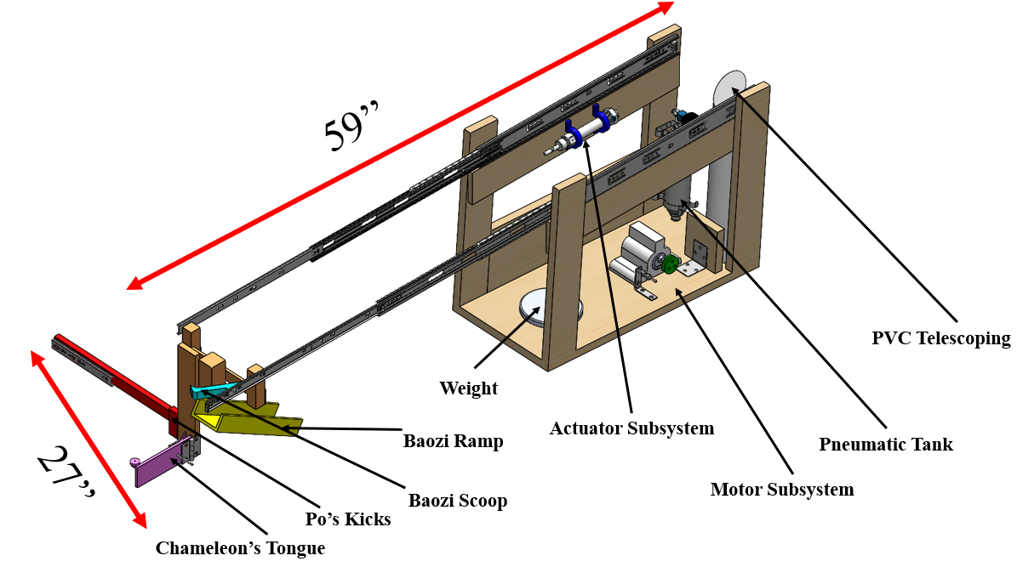
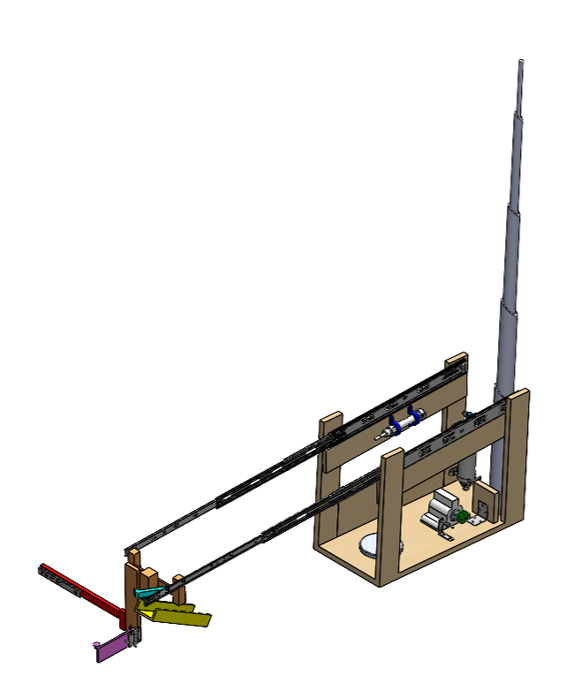
Fully Autonomous Competition Mobile Robot (1st Place)

Autonomous Machine Design • May 2024 to Aug 2024

SolidWorks Embedded C++ Arduino IDE FMEA Risk Analysis House of Quality (QFD)

System Architecture & Strategy

In Georgia Tech's signature mechatronics competition, teams must build and program an autonomous machine from raw stock materials to execute complex physical tasks inside an arena under strict dimensional, weight, and timing constraints.

  • Design Methodology: Developed complete specification sheets, Quality Function Deployment (QFD) House of Quality, and FMEA matrices to mathematically weight mechanisms before cutting material.
  • Fabrication Load: Managed 30+ sustained weekly hours of SolidWorks modeling, rapid laser cutting, 3D printing, and mechanical bench assembly across our three-person team.
  • Autonomy in C++: Created deterministic microcontroller routines sequencing limit switch triggers, motor drives, and mechanical deployment arms with zero manual intervention.
Result: Took 1st place overall out of 5 teams in the final arena tournament through rigorous tolerance control and reliable autonomous logic.

Competition Metrics

Tournament: 1st Place Champion
Work Commitment: 30+ Hours / Week
Firmware: Autonomous C++ State Machine
CAD Tooling: SolidWorks (Full Assembly)
📄 Final Presentation Deck (PDF) Fullscreen →

Machine CAD, Hardware & Team Gallery

Click the preview image to open fullscreen high-resolution inspection.
Assembled Autonomous Robot
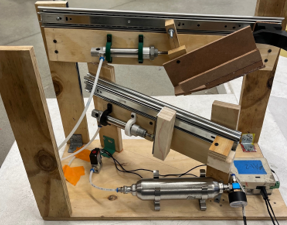
Final Assembled Autonomous Competition Robot
Robot profile Assembled Robot
Annotated CAD Annotated CAD
Actuated CAD Actuated CAD
Early prototype Early Prototype
Team celebration 1st Place Victory
Instructors photo Faculty Review
BETTER PLACE DRONES // GLOBAL XPRIZE

Autonomous Fire-Suppression Drone Payload (CO2 Blowdown)

Undergraduate Research Assistant • Aug 2024 to Dec 2024

SolidWorks CAD Pneumatic Blowdown Fluid Delivery Subteam Coordination

Pneumatic Blowdown Fluid Delivery

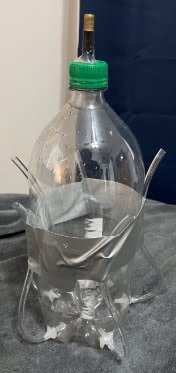
Wildfire suppression drones cannot carry heavy motorized water pumps without sacrificing flight time. We engineered an instantaneous, passive-pressurization blowdown payload system.

  • CO2 Blowdown Delivery: Designed a regulated pneumatic blowdown system using CO2 canisters to pressurize a water reservoir, blasting suppressant immediately upon valve release.
  • Cross-Team Alignment: Coordinated across 5 subteams (airframe, telemetry, avionics, payload, recovery) to translate SolidWorks CAD assemblies into flight-ready test prototypes.
  • Mass Optimization: Reduced fluid line mass and lightened mounting brackets to maintain aircraft stability in high-wind conditions.
Result: Qualified in the Top 30 teams internationally out of 300 participating entries in the XPRIZE Wildfire competition.

System Parameters

Competition: XPRIZE Wildfire Semi-Finalist
Pressurization: CO2 Canister Blowdown
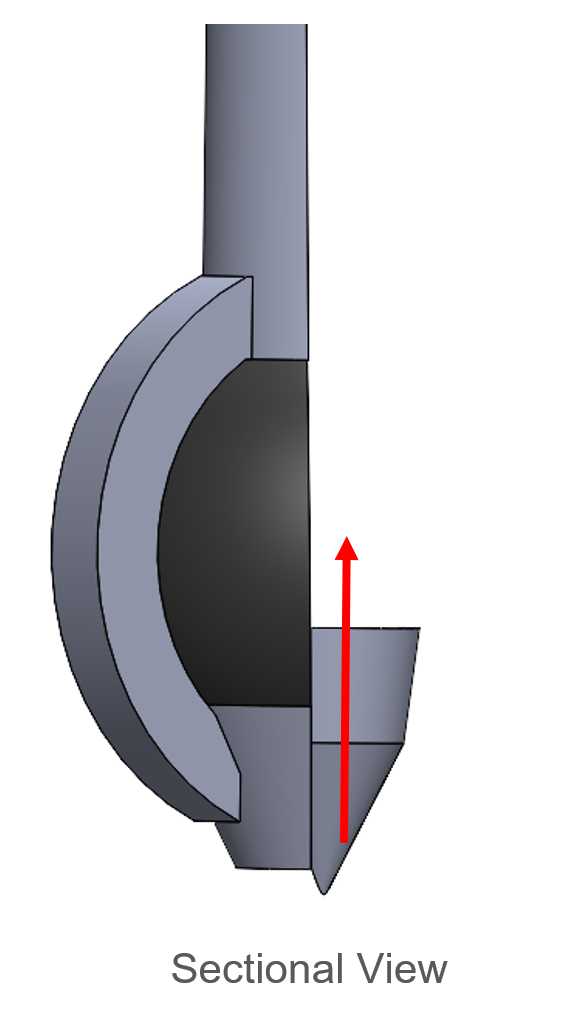
CAD Tooling: SolidWorks Sectional Modeling
Coordination: 5 Cross-Discipline Subteams
Global Wildfire Competition Semi-Finalist

System CAD, Section Views & Airframe Integration

Click the preview image to open fullscreen high-resolution inspection.
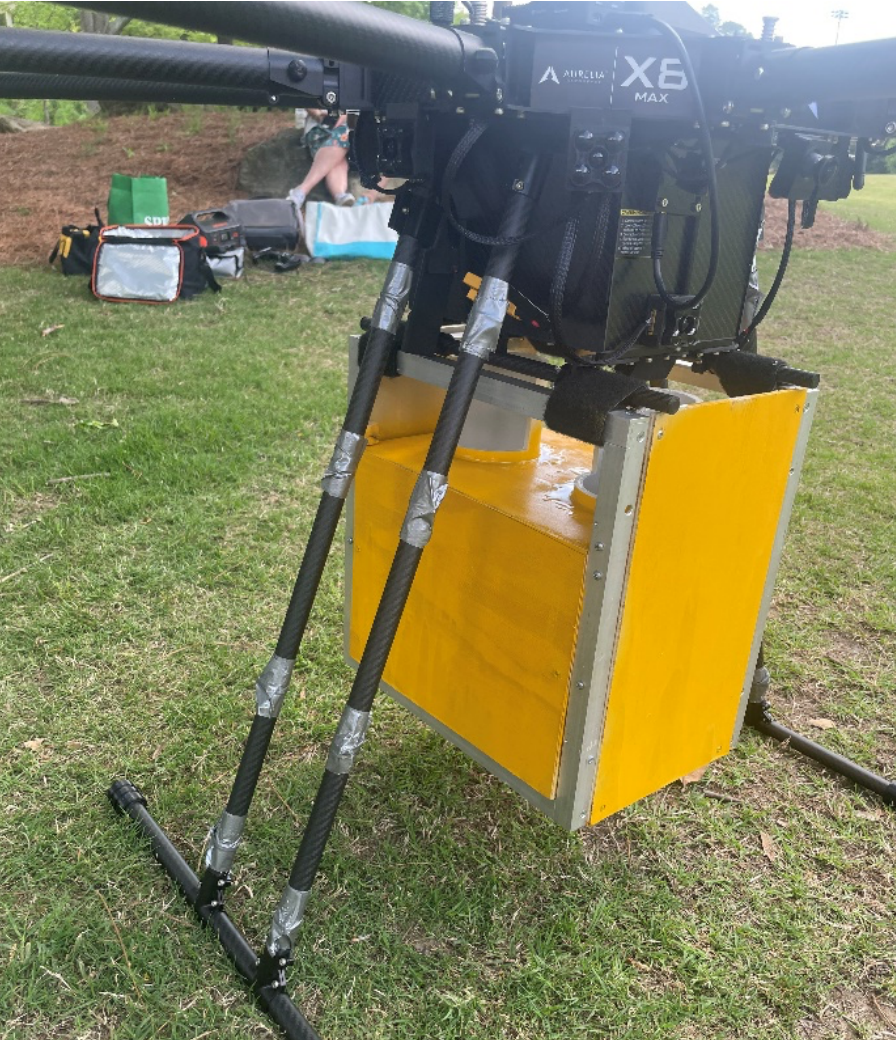
Payload attached directly to drone airframe
Payload Module Mounted on Flight Airframe
Mounted payload Airframe Mount
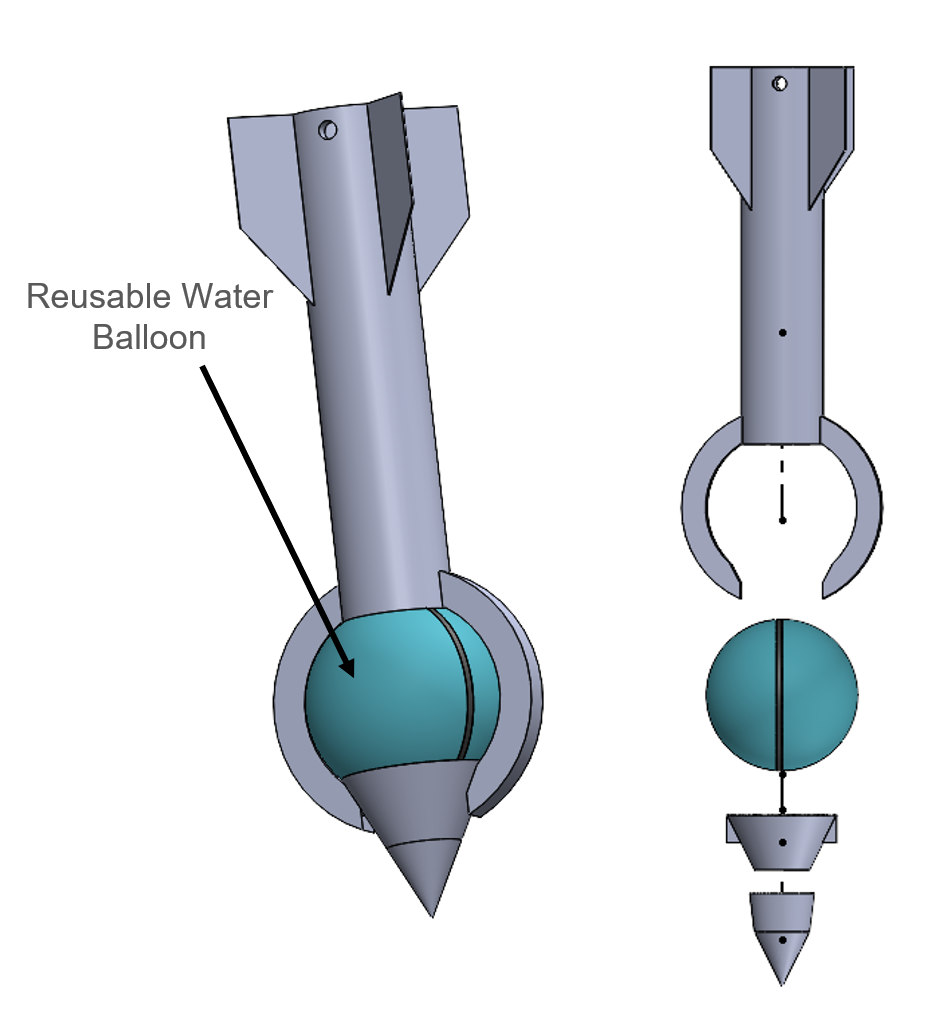
Rocket payload CAD Capsule CAD
Sectional view Sectional View
Blowdown tank test Bench Test Tank
EDGE ML // COMPUTER VISION

Deep Learning Concrete Crack Classifier & PCA Diagnostics

Computer Vision Project • Aug 2025 to Dec 2025

Python TensorFlow VGG16 PCA (80% Reduction) K-Means OpenCV

Pipeline Execution & Dimensionality Reduction

Visual structural health inspection of civil infrastructure is traditionally slow, manual, and subjective. I engineered an edge-oriented computer vision pipeline that classifies concrete defects with near-perfect reliability while minimizing computing overhead.

  • Transfer Learning: Fine-tuned a pre-trained VGG16 CNN as a deep feature extractor, converting 2,000 concrete image samples into 512-dimensional feature tensors.
  • Principal Component Analysis: Captured 95% of data variance within 104 components, proving high feature correlation and compressing input dimensionality by 80%.
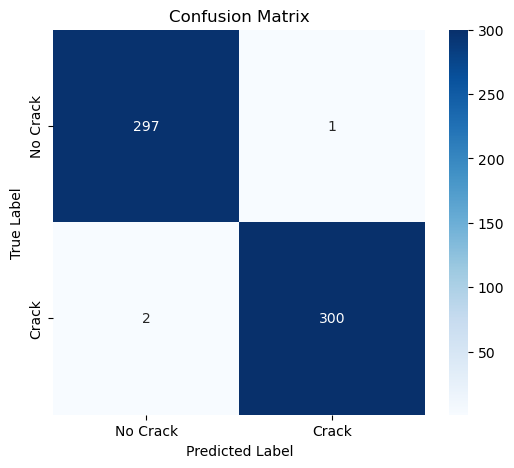
  • Logistic Regression Classifier: Reached 99.67% test accuracy on 600 validation images with 1.00 precision and recall across classes.
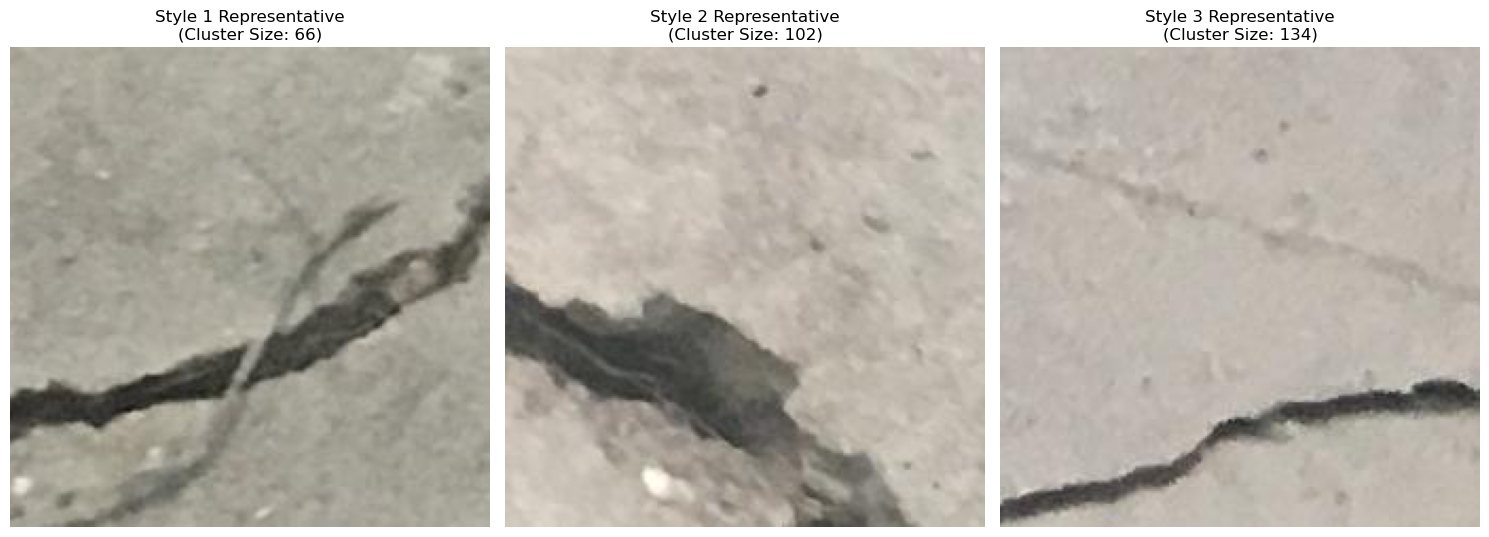
  • Unsupervised Error Diagnostics: Clustered defect morphologies via K-Means (K=3) into thick, jagged, and hairline crack types, confirming robust detection across distinct structural failure modes.
Result: Demonstrated real-world machine learning applied to physical infrastructure with sub-millisecond edge classification speed.

Pipeline Performance

Accuracy: 99.67% (600 test images)
Dimensionality: 80% reduction via PCA
Variance Captured: 95% in 104 components
Precision / Recall: 1.00 / 1.00 across classes
Morphology Clusters: 3 types (Thick, Jagged, Hairline)

Model Confusion Matrix & Crack Morphologies

Click the preview image to open fullscreen high-resolution inspection.
Confusion Matrix: 99.67% test accuracy
Confusion Matrix (Only 2 errors across 600 validation images)
Confusion matrix Confusion Matrix
Three crack styles Crack Morphologies

Experience & Education

Click on any role or degree to review key responsibilities and technical outcomes.

M.S. in Computer Science (Computational Perception & Robotics)

Georgia Institute of Technology

Aug 2026 to Dec 2028 (Enrolled)
  • Enrolled in the Computational Perception & Robotics specialization, taking CS 7641 (Machine Learning) and CS 7638 (AI Techniques for Robotics / AI4R).
  • Focusing on the intersection of dynamic robotic manipulation, SLAM, sensor fusion, and real-time computer vision.

Lead Mechatronics Engineer

Khanjur R&D (Senior Capstone)

Jan 2026 to May 2026
  • Designed and built a wireless robotic gripper powered by Shape Memory Alloy (Nitinol) wire in place of conventional motors.
  • Wrote custom embedded C++ firmware on an ESP32 to host a local Wi-Fi web server for zero-latency smartphone teleoperation.
  • Engineered PWM-driven MOSFET switching circuits to tightly regulate current and prevent smart material fatigue.

B.S. in Mechanical Engineering

Georgia Institute of Technology

Aug 2022 to May 2026
  • Graduated with focus in machine dynamics, controls, heat transfer, and mechanical prototyping.
  • Served as Varsity Swim Team Captain (2024 to 2025); recipient of the 2024 Brandon Adams Teammate Award.
  • Coursework includes System Dynamics, Heat Transfer, Circuits & Electronics, Computing Techniques, and Intro to OOP.

Research Assistant

Better Place Drones (XPRIZE Team)

Aug 2024 to Dec 2024
  • Engineered a CO2 blowdown fluid system pressurizing an onboard tank for instantaneous wildfire suppressant release.
  • Coordinated across 5 subteams from initial SolidWorks mechanical CAD to verified flight-ready test prototype.
  • Placed in the Top 30 international teams out of 300 participating organizations.

Fire Protection Engineer Intern

Jensen Hughes

May 2025 to Jul 2025
  • Drafted life safety, fire alarm, and suppression system layout drawings in AutoCAD and Bluebeam Revu.
  • Navigated strict building codes (NFPA 13 and 72) and verified spatial clearances against architectural drawings.

Technical Capabilities

Hands-on experience across hardware mechanisms, embedded circuits, and autonomy stacks.

Hardware & Firmware

ESP32 Embedded C/C++ Arduino IDE MOSFET Switching PWM Control Smart Alloys (Nitinol) Soldering & Wiring 3D Printing / Additive

Mechanical & Prototyping

SolidWorks AutoCAD Bluebeam Revu FMEA Risk Analysis QFD / House of Quality Fluid & Blowdown Systems Kinematic Linkages

Software & Autonomy

Python C / C++ OpenCV TensorFlow Scikit-learn MATLAB Git / GitHub Linux / Bash (In-Training) ROS 2 (In-Training)

Future Roadmap

Where I am focusing my engineering growth over the next chapter.

GOAL_FLIGHT_PLAN // 2026-2030
01

Deploy Real Physical Hardware

Build autonomous machines that operate reliably out in real-world conditions, confronting friction, changing lighting, and unpredictable kinematics rather than staying in clean simulations.

02

Unite Machine Learning with Dynamic Mechanisms

Apply computational perception, state estimation, and spatial mapping from my Georgia Tech OMSCS curriculum directly to multi-axis physical robotic manipulators.

03

Bring High Ownership to an Ambitious Engineering Team

Deliver the same relentless discipline, rapid learning under pressure, and mutual accountability forged across four years of Division I athletics to a fast-moving robotics startup.